Home >> Peru Dossier

Peru Dossier

The facts

  • Official Name: Republic of Peru
  • Capital: Lima
  • Population: 28 million
  • Total Area: 1.3 million square kilometres (twice the size of France)
  • Official Language: Spanish, Quechua and Aymara also spoken in places
  • Religions: Roman Catholic 90%
  • Voltage: 220 volts. Sockets are a mixture of the European, two-pronged round variety and US flat-pin.
  • Dialling Code: +51
  • Time Difference: GMT/UTC -5. For other time differences please visit www.timeanddate.com
  • Airport Departure Tax: US$30.25

Brief history

Ancient Peru was the seat of several prominent Andean civilizations, most notably that of the Incas whose empire was overthrown by the Spanish conquistadors in 1533. Peruvian independence was declared in 1821, and remaining Spanish forces defeated in 1824. After a dozen years of military rule, Peru returned to democratic leadership in 1980.

Geography and weather

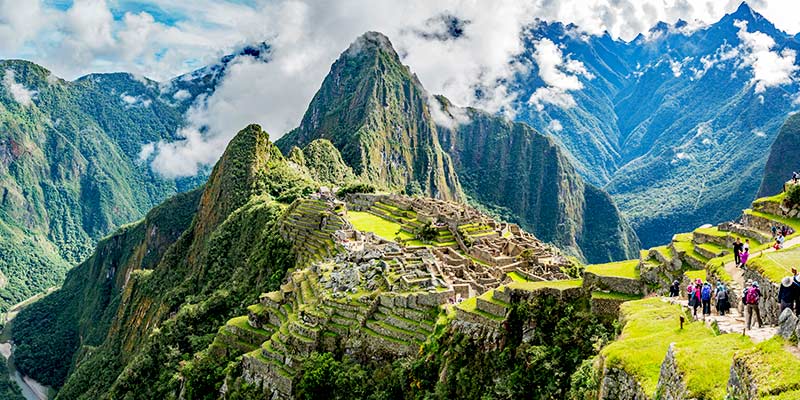
Peru is unique in its wide variety of ecosystems ranging from the driest/hottest desert in the Americas, to the high Andean peaks (over 7,600 metres above sea level); and a two-thousand-kilometre-long belt of cloud forest, rich in flora and fauna, to a vast area of lowland Amazon jungle, covering more than half the country. The three main zones of Peru are known as La Costa (the coast), La Sierra (the mountains) and La Selva (the jungle).

Over the last few years, the Peruvian weather has been rather unsettled possibly as a result of global warming. However, it still rarely rains on the coast, although the Lima region does experience substantial smog, coastal fogs or mists and even drizzle; particularly between the months of May and November.

The climate in the Sierra and Selva regions can be divided into a wet season (November-April) and a dry season (May-October). There is, of course, some rain during the dry season, but it is much heavier and much more frequent in the wet season. Don’t be put off by the expression “rainy season” however, as this normally means a couple of downpours each day rather than continuous rain. Again, weather conditions have been quite unsettled in these regions over the last ten years or so, with the Altiplano zone, around Puno, being affected by serious droughts, which have left the water level of Lake Titicaca at its lowest for years.

Visit www.worldclimate.com to get an idea of what the weather will be like on your tour.

Visas

Currently EU, US, Canadian, Australian and New Zealand citizens can visit Peru for up to 90 days (ask on arrival for a 90 day entry as 30 days is the standard issued) without a visa. However, the situation does change periodically, so you should always check with your local Peruvian embassy before departure. All nationalities need a tourist or embarkation card (“tarjeta de embarque”) to enter Peru. This is issued at frontiers or on the aircraft before landing. Tourist cards are usually valid for between 60 and 90 days (60 for US citizens). In theory you have to show an outbound ticket (by air or bus) before you'll be given a card, but this is rarely checked. For your own safety and freedom of movement, a copy of the tourist card together with a copy of your passport must be kept on you at all times - particularly when travelling outside of the main towns. You must also retain this card for when you exit Peru.

Arrival

For details on reaching your tour joining point please refer to your specific tour joining letter which will be sent to you with your final tour vouchers.

Money

ALL prices stated in this dossier are given as a guide only and are subject to change. All prices are quoted in US dollars.

Local currency

The monetary unit in Peru is the nuevo sol. For up-to-date exchange rates with your own currency visit www.oanda.com or www.xe.com.

Changing money, credit cards & ATMs

We recommend that you bring cash/travellers cheques in US dollars only. For more information about the best way to carry your money please see the Pre departure information (which will be sent to you with confirmation of your booking). There is no restriction on the amount of foreign currency that you may bring into Peru, however very large sums should be declared on arrival. There is often a general lack of small change and we recommend maintaining a supply of small denomination notes and coins.

Change enough money to see you through the first few days of your trip – particularly if it is a weekend. Please note you can only change cash (not travellers cheques) at the Cambio and there are other ATM’s in the city (and in Arequipa, Cuzco and Puno) where you can get money out 24 hours a day.

Important: Please note that ATMs in Peru do not always automatically release your credit or debit card at the time when you receive your money. Please be aware that you sometimes have to push a button to request your card to be returned. Many ATMs in main towns have instructions in English.

Working out your budget

Our pre-departure information and tour dossiers include a general list of all the things you should take into consideration when budgeting and an estimate of what you should allow per day for spending money. Below are some specific notes relevant to our tours to Peru .

Entrance fees

Generally speaking most entrance fees will be covered by the recommended spending money. There are, however, other sites and museums that are not part of the tour programme which you may wish to visit in your free time – particularly in Lima. The average entrance fee is approx US$4.50, with the most expensive being no more than US$20.

For instance the excellent Museo de Oro del Perú y Armas del Mundo (Gold Museum) in Lima costs approximately US$8.50. The museum is on the outskirts of the city, so you will need to take a taxi or an organised tour. Many of the churches charge a nominal fee to enter. For example Santo Domingo and San Francisco in Lima cost approx US$1.50 each. One of the best value places to visit in Lima is the Museum of the Inquisition as it is free and very interesting – especially the carved ceilings. There is vast array of other museums in Lima, most of which have minimal entrance fees. Please bear in mind that most museums are closed on Mondays. If you have an International Student Card you will often be entitled to reduced entrance fees.

Shopping

Haggling is expected in Peru and hunting for bargains can be a real highlight. For tips on bargaining and shopping etiquette please see the pre departure information booklet.

For up-market, designer goods visit the coastal suburb of Miraflores in Lima. Here prices are usually fixed unless you are buying from a street vendor. There are also some good quality handicraft shops but the prices do tend to be a little higher although you may sometimes be able to bargain. Another good area for handicrafts is La Feria Artisanal in La Marina. This is the biggest craft market in Lima and bargaining is certainly expected.

You’ll find good handicraft markets in all of the touristy towns. San Pedro, near the train station to Machu Picchu, is one of the best markets in Cuzco but beware of pickpockets. Puno has some good market areas along the railway lines and they should be cheaper than Cuzco and a much better place for alpaca/llama sweaters. The touristy Pisac Market in the Sacred Valley of the Incas is especially is good for variety, if not necessarily price.

Your best buys are wall-hangings (tapestries), hand-woven textiles, alpaca and llama woollen products, hats, blankets, furry slippers, coats, ceramics, papier-mâché ornaments, gold and silver objects and jewellery.

Tipping

In most Peruvian restaurants a 10% service charge is included on the bill. Check the bill to make sure and, unless you get exceptional service, it is not necessary to give a further tip. Please note there is also a 20% government tax added onto all food bills. You should take both these charges into account when reading the menu, as 30% will almost certainly be added onto the bill at the end. You do not need to tip taxi drivers, etc but you should tip people who assist you with your luggage at hotels (don’t over-tip as a sol or two is usually enough). Tipping guides at the end of excursions and treks etc is always appreciated and your tour leader will advise you on the amount for this. It is commonly accepted that the standard tip for guides on the Inca Trail is US$30 (per trekker).

Optional excursions

A full list of the main excursions available on each tour can be found on the optional excursions guide, available from our website. All prices given are approximate and are subject to change due to local inflation or exchange rates.

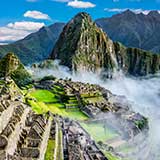
Inca Trail and Machu Picchu

Regulations regarding the Inca Trail are subject to frequent change (often without notice) by the Inca Trail Governing Body. It is therefore vital that you visit the “Useful Information” section of our website or look in our current brochure for details of how to book the trek and secure a permit. You may not be able to complete the trek if you do not read this information. We also offer an alternative ‘Lares Trek’ which culminates with a visit to Machu Picchu. For further information (day to day itinerary, fitness, packing etc) about both treks please ask your agent or download our ‘Inca Trail Information Sheet’ or ‘Lares Trek Sheet’ from our website.

Local transport

Taxis are recommended for all journeys within a city. In Peru, taxi meters are not normally in evidence, so you will find yourself engaging in a bit of haggling with the driver to agree upon the fare. It is a good idea to find out in advance, from your tour leader or the hotel receptionist, approximately how much the fare should be. It will also help if you can speak a few words of Spanish. You will almost certainly have to accept that you will pay more than the locals do.

Approximate fares (all prices are per taxi) from our hotel in Lima to:
The Gold Museum - US$5
Miraflores - US$3
Barranco - US$4.50
Lima Airport - US$10

Approximate fares (all prices are per taxi) from our hotel in Cuzco to:

San Blas - US$0.60
Sacsayhuaman - US$5
(the driver will probably wait for you for an extra US$1.50 or so)
Cuzco airport - US$1.50

Local buses are very cheap to use, but you really need to be able to speak reasonable Spanish to get by. There are also some bus stops/stations, especially in Lima, that are not recommended for tourists.

Security

The introduction of tourist police and the closure of many street vendors in areas notorious for thieves and muggings have greatly improved the security situation in Peru. These days you just need to be cautious and sensible (NOT paranoid) and you should be fine. Don’t walk around lonely back streets, especially on your own or at night, don’t wear expensive looking jewellery or a classy watch and don’t carry a wallet in your back pocket. Don’t carry your camera openly; always have it in a small day pack which is firmly attached to your body, preferably in the front in crowded places. Always wear a money belt or leave your valuables, including your passport, in the hotel security box.

Local food and drink

All meals are included when camping and lunch is included on travelling days in the truck. When staying in hotels all meals are at your own expense. As a guideline a simple snack (e.g. a sandwich) can cost as little as US$0.70, a light meal will cost around US$3-$6, and even a meal in one of the best restaurants in Cuzco or Lima costs very little in comparison to what you would expect to pay at home (usually around US$20-$30). Obviously this depends on what you order and if you have wine or other drinks which will certainly increase the bill. In cheaper restaurants where Peruvians and backpackers eat, you can get meals for as little as US$1.50.

Your tour leader will be able to recommend restaurants.

All drinks such as water, soft or alcoholic drinks are at your own expense at all times. The following is a guideline for drinks bought in a shop in the street. Prices in restaurants and hotels can sometimes be more than double the prices specified below:

1 litre of water US$0.70
30cl bottle of soft drink US$0.50
30cl bottle of beer US$0.70
50cl bottle of beer US$1.00

You should be wary of drinking the local tap water. Bottled water, carbonated soft drinks and fruit juices are widely available and much safer.

Food

In Peru the basic diet focuses around chicken, beef or seafood, mostly with french fries or rice (or both) and possibly a little salad. Soups are also common and good value. Coastal dishes are seafood based and include “ceviche” which is fish marinated in lemon juice, onion and hot peppers traditionally served with corn on the cob, cancha (toasted corn), yucca and sweet potatoes. “Escabeche” is fish with onions, green and red peppers, prawns, cumin, hard boiled eggs, olives and sprinkled with cheese. The most common fish is “corvine” (sea bass) which can come simply grilled or fried or with sauces. “Chupe de camerones”, a prawn stew, is another delicious dish certainly worth trying.

Corn and potatoes are Peru’s main vegetables – particularly in the highlands. “Causa” is a dish made from yellow potatoes, lemons, peppers, hard-boiled eggs, olives, lettuce, sweet corn, sweet potato, cheese and onion sauce. “Choclo con queso” is a large corn on the cob snack with very salty cheese. Other local favourites include “tomales” which is like a boiled corn dumpling filled with chicken and wrapped in banana leaf and “lomo saltado” which is a kind of stir-fry beef with tomatoes, onions, fried potatoes on a bed of rice.

An interesting local speciality is cuy (pronounced: cooee). This is roasted guinea pig which some people say tastes like chicken, others, like cooked cardboard.

In most of the larger cities and towns you will find an array of international cuisine. There are pizzerias on every corner and Chinese (chifas) food is very common. In places like Cuzco even Indian and Japanese restaurants have now opened. A cheap, filling three-course lunch (normally called a “menú económico”) can often be had for about US$1.50.

Vegetarians

If you are a strict vegetarian you may experience a distinct lack of variety in the food available, especially in small towns. However vegetarian alternatives are becoming more popular particularly in south Argentina. Our tour leaders will do their best to provide interesting vegetarian alternatives for included meals, but your patience and understanding is requested.

Drink

In Peru some of the hotels we use have bars or serve alcoholic drinks. If there is not a bar in the hotel then there is sure to be a bar within walking distance. In more up-market hotels, imported beers and spirits are available but usually at a high price. If you are happy to drink the local spirits then there is an array of rums, pisco (white brandy) and even palatable wine. All these are very cheap, e.g. a bottle of rum could be as little as US$5 in a local shop. Quite often the mixer to go with it (Coke) is more expensive. There are various brands of beers including Cuzqueña, Arequipeña, Cristal and Pilsener.

The soft drink of choice in Peru and a source of national pride is the bright yellow Inca Kola. Possibly an acquired taste, but indisputably popular. So popular in fact that McDonalds forced Coca Cola to allow it to be sold in its Peruvian branches.

The origins of pisco - a grape-based spirt - is keenly contested between Peru and Chile. Regardless of origin it is the national drink of Peru (the fact that the town Pisco is in Peru lends credence to Peru's claim). Drank in a variety of ways, the most iconic is the pisco sour, which has a raw egg amongst its ingredients.

National holidays

1 January - New Year’s Day
2 April - Malvinas Day
March/April (variable) - Semana Santa (Easter)
Amongst the nationwide commemorations there is a spectacular procession in Cusco in honour of the patron saint "El Señor de los Temblores". The people of Tarma make carpets of flowers to cover the streets for their evening processions. Holy Week is solemnly commemorated in many other highland towns (half day holiday on Holy Thursday, full day holiday on Good Friday).
1 May - Labour Day/May Day
29 June - St Peter’s and St Paul’s Day
29 July - Independence Day
30 August - St. Rose of Lima Day
12 October - Columbus Day
1 November - All Saint's Day
8 December - Immaculate Conception
25 December - Christmas Day

Please remember that on public holidays, banks, museums and shops will be closed and often public transport is less frequent than usual.

Emergency contacts

In the case of an emergency before you meet your tour leader, please contact our local office in South America:

Tucan Travel Cuzco
Avenida El Sol 616,
Office 202,
Cuzco (Opposite the Qoricancha in the Maximo Nivel building)
AP0637, Cuzco, Peru

Tel: (+51) 084 241123
Fax: (+51) 084 248691
This e-mail address is being protected from spambots. You need JavaScript enabled to view it This e-mail address is being protected from spambots. You need JavaScript enabled to view it

Keiko Fernandez (+51) 984 65 3726
or (+51) 984 74 88 05
or Zac Lanham (+51) (+51) 984 76 21 64

Please note that these numbers are a service for emergency calls only. We respectfully request that you consider the urgency of your enquiry. Non-urgent enquiries should be made during office hours. Please be considerate of time zones.

Opening Hours: Monday-Friday 9am-5.30pm; Saturday 9am-1pm.

Please note: this office is not a sales office, it is for operations only.


Be a part of it!

Facebook

Join us on Facebook

Twitter

Google+

Newsletter Signup

Title
First name
Surname
Country

Book with a tour operator you can trust

Book online with no credit card surcharges

Financial Protection

Industry Memberships How to Book
Website and online bookings by Metafour


Login
SSL Certificate Authority